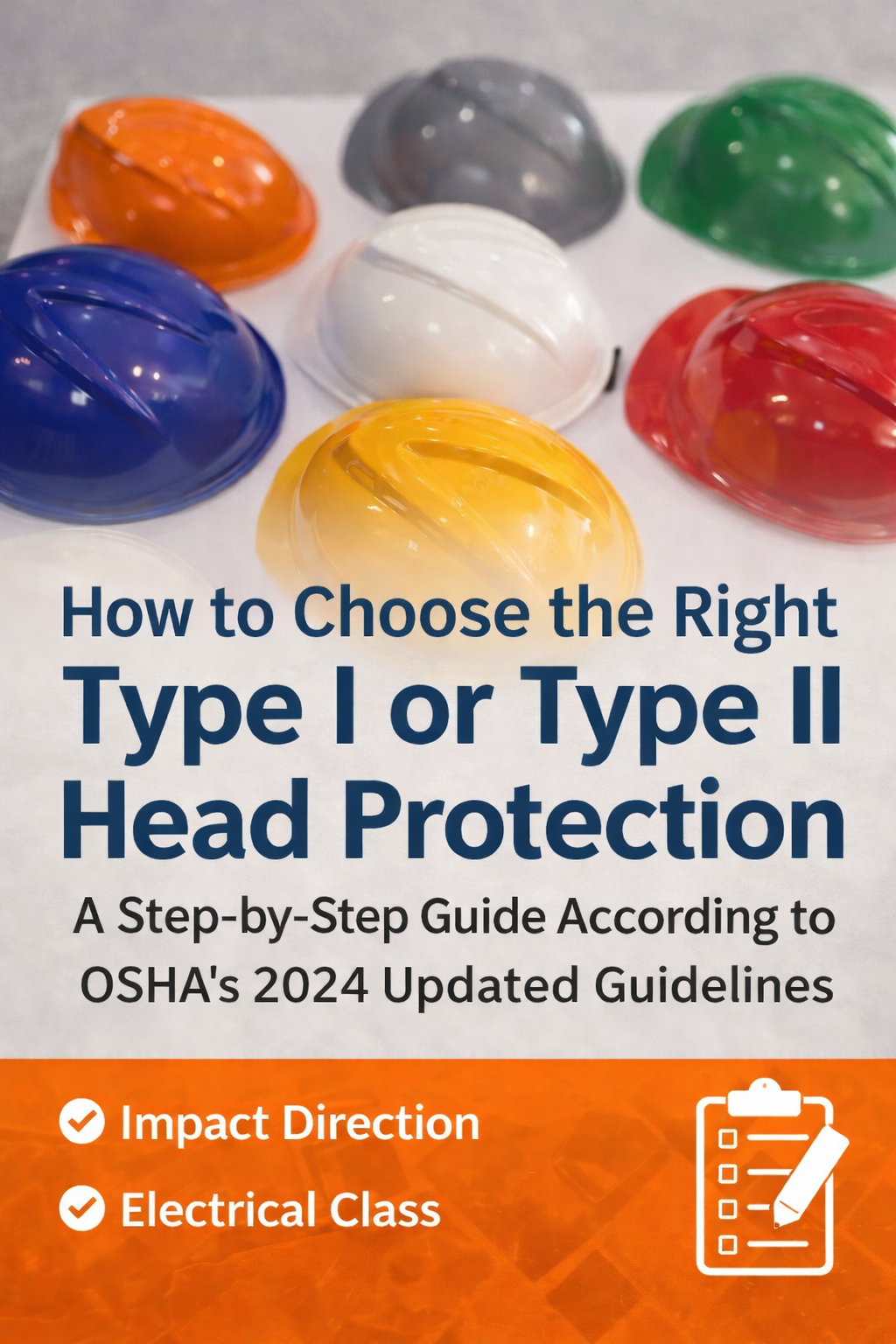
How to Choose the Right Type I or Type II Head Protection
OSHA’s updated guidance highlights the importance of hazard assessments when selecting head protection. Here are five key steps to help employers choose the right helmet type, electrical class, and accessories for their worksite risks.
Choosing the proper Type I or Type II head protection often requires considering several key factors, including OSHA guidelines, the unique hazards of your jobsite and application, and special concerns such as heat stress and rotational motion.
Let’s start with the latest from OSHA’s “Head Protection: Safety Helmets in the Workplace” Safety and Health Information Bulletin.
OSHA released an updated version of its “Head Protection: Safety Helmets in the Workplace” SHIB in April 2024, stating, “With a thorough understanding of the benefits and capabilities of head protection options, employers and workers can make informed decisions on selection and use.” (1).
OSHA recognizes two Types (impact) and three Classes (electrical) of head protection:
According to the SHIB, accessories (chinstraps, face shields, eye protection, and hearing protection) may also be considered as options to help address specific jobsite and application hazards and concerns.
OSHA notes that “modern head protection, whether it’s a safety helmet or a hard hat, varies in styles and levels of protection, allowing employers and workers to choose head protection appropriate for the job.” (1). OSHA continues that “Employers must conduct a hazard assessment at their job site and, based on the workplace hazards, determine whether head protection is necessary and, if so, the most appropriate type.
We recommended you to subscribe to our newslatter, enter your email below to get daily update about us.

 Arabic